It’s 1948. You’re shopping in a store in Philadelphia when you see an 84-year-old woman being arrested for yelling at Mother’s Day shoppers. Your first thought might be that she’s just a cranky old lady. But here’s the twist– she is the reason Mother’s Day exists. Her name is Anna Jarvis.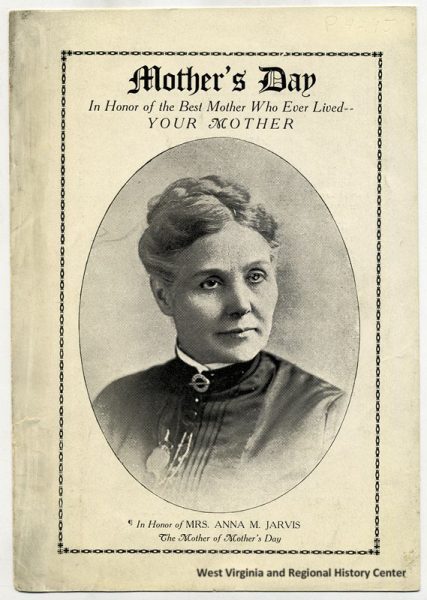
Her mother, Ann Reeves Jarvis, had organized women during the Civil War to nurse soldiers from both sides. At her mother’s funeral in 1905, Anna promised that there would be a holiday in her honor. It took three years to hold the first service in a small church in West Virginia. Then, in 1914, President Wilson signed into law that the second Sunday of May every year would belong to mothers.
Within ten years, Mother’s Day had become the second-biggest holiday for the American floral industry. Hallmark started printing cards, and candy companies marked up chocolate boxes every May. Anna was furious, not because people were celebrating mothers, but because of how they were doing it. She wrote, “A printed card means nothing except that you are too lazy to write to the woman who has done more for you than anyone in the world.”
So, she fought back in a one-woman war against essentially the entire world. She launched lawsuits and was arrested multiple times. Anna even publicly criticized Eleanor Roosevelt for using Mother’s Day to raise funds. She crashed florist events and protested at charity events just to fight against the holiday she had created. Anna spent her inheritance on lawsuits, public campaigns, and legal fees to protect a holiday from being celebrated.
By the end of her fighting in the 1940s, Anna was blind, penniless, and locked up alone in a sanitarium. Tragically enough, her hospital fees were paid by the very same florists (who still showed appreciation despite the irony) she fought so hard against. Later in 1948, Anna died in a small room without children around her to support her, or even carnations being sent at all. The worst part was that not a single card of thanks ever reached her.
Now fast forward from 1948’s Philadelphia to 2026, to your Taft dorm room. At some point this week, you might’ve gotten a text from your mom. Her texts were probably along the lines of, “Did you sleep? Is it cold there? Are you drinking water?” These words are all part of the deeply warm and familiar sense of a mother’s worry for her kids. As expected, your response, while doomscrolling in bed, is probably just one letter: “k.”
One strange thing about boarding schools is that you stop noticing what you’re missing until you go home. You don’t pay much attention to those silent gestures of affection from your loved ones, such as a plate of freshly cut fruit on the counter, or your favorite hot dishes on the table ready for you to enjoy. The suitcase you dropped in the hallway is somehow emptied, washed, and neatly folded on your bed by morning. This is what love looks like at home; not in words, but in the things quietly done for you.
You don’t need numbers to see it. The meals just run out. You’re not eating dinner at home five nights a week anymore. You haven’t been for years. Now it’s just Thanksgiving, Christmas, and the summers you don’t get an internship. If you really want to count, that’s it. She’s been doing this since you were born. You just never noticed.
For nearly forty years, Anna fought the wrong enemy. The florists, the Hallmark cards, they were never the real enemy. The real enemy is how easy it is to let the person who packs your suitcase become the person you reply to with “k.”
This May, please do not buy your mother a card. Your mom will never say it, but she doesn’t want one. Pick up the phone, or sit down for ten minutes and write something on whatever paper you have, anything she knows came from you. It doesn’t have to be long or deep, just make it honest. Give your mother that moment tonight, before the busy schedule at Taft makes you forget.
Photo courtesy of West Virginia and Regional History Center