Earth Day, celebrated every year on April 22, is the planet’s annual reminder that it could use a little more appreciation and a little less trash. The holiday began in 1970, when pollution and oil spills were becoming too obvious to ignore, and people began to realize that the Earth was not going to clean up after us like some giant cosmic parent. Senator Gaylord Nelson of Wisconsin came up with the idea for a nationwide environmental teach-in, inspired by the student activism of the 1960s. On April 22, 1970, around 20 million Americans joined rallies and community events to speak up for cleaner air and water and a better future. The turnout sparked major changes, including the creation of the Environmental Protection Agency and the passage of the Clean Air Act and the Clean Water Act. Today, more than a billion people around the world use the day to focus on serious issues like climate change, deforestation, and more. Even though Earth Day addresses big problems, its message is simple: every action counts.
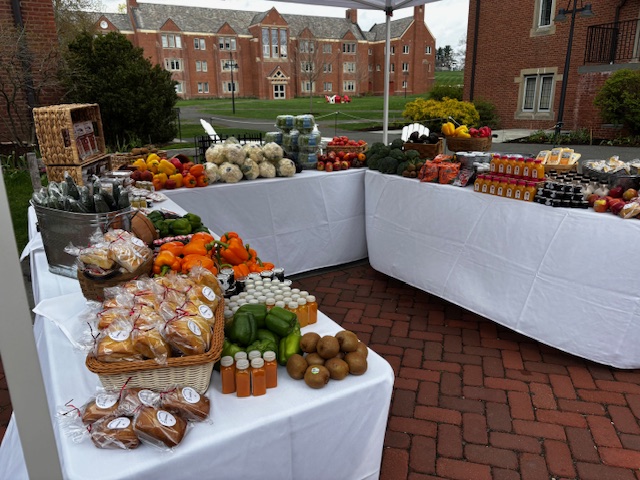
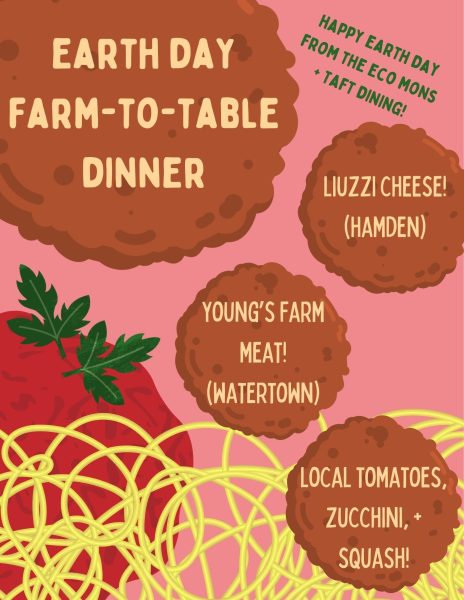
At Taft, the Eco Mons were determined to make it something more. The group organized an invigorating two-day program intended to both engage and educate the Taft community on the importance of Earth Day. On the evening of April 21, the dining hall executed a delicious farm-to-table meal. The menu of meatballs, pasta, and sauce was straightforward by design, and the locally sourced ingredients proved to create a delicious meal. At the close of the evening, the Eco Mons weighed the compost collected from the evening. Proving to be an exercise of accountability, the dinner helped to temporarily alleviate the food waste problem that has long plagued the Taft community. On April 22nd itself, Earth Day, the Eco Mons, aided by their fellow motivated conservationists, planted trees on the pathway up to the athletic center. The trees planted will grow long after the students who have planted them have graduated, and the action of planting will prove to be a smart investment in the future of Taft sustainability.
One of the most notable trees planted this year was a Ginkgo biloba, a remarkable species often referred to as a “living fossil.” Ginkgo relatives appeared in the geologic record roughly 250 million years ago, and the species itself appeared in the fossil record around 200 million years ago, having remained morphologically similar over time. Ginkgo species are also consid
ered endangered outside of human cultivation, making the planting of this specimen meaningful. The tree also carries special significance at Taft because we once had a rare, century-old female ginkgo on campus that was unfortunately removed during the construction of the new dining hall. The newly planted Ginkgo tree is located along the pathway to athletics just below the tennis courts. Soon, its distinctive bi-lobed leaves will emerge as a visible reminder of both Taft’s history and its commitment to environmental stewardship. Special thanks to Bryan McCleary, the Grounds Department, and to Mr. McAloon and the EcoMons who helped plant this specimen tree.
The message Earth Day often carries is urgent and can be overwhelming. The observable, disastrous effects of climate change and global warming can be anxiety-inducing if we are not careful. By translating this pertinent message into something tangible and digestible, Eco Mons aimed to provide a simple call to action for the regular Taft student. When we spoke to one Eco Mon, they commented, “The food was really good; I would consider today a success. Also, compost more!” Earth Day at Taft is about taking care of a place that has given so much to all of us, and that is exactly what happened this year.
Photo courtesy of Veronica Antov, Eco Mons