



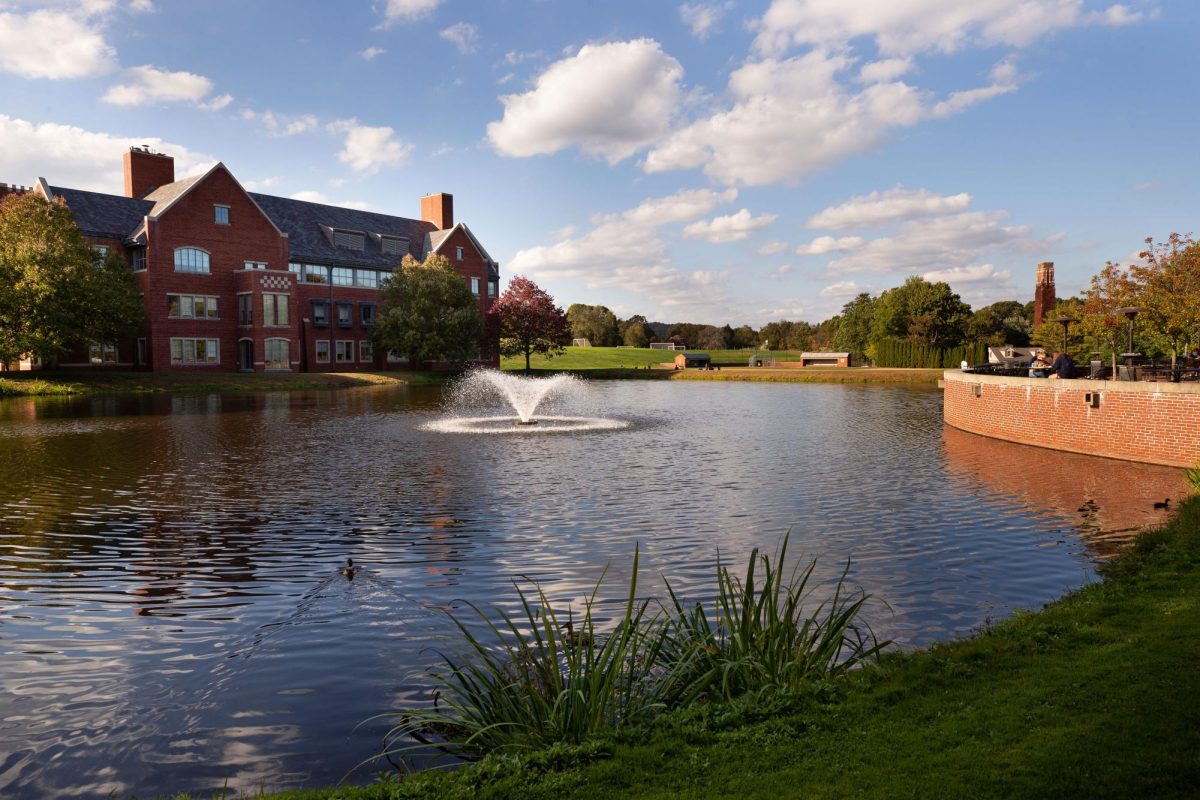


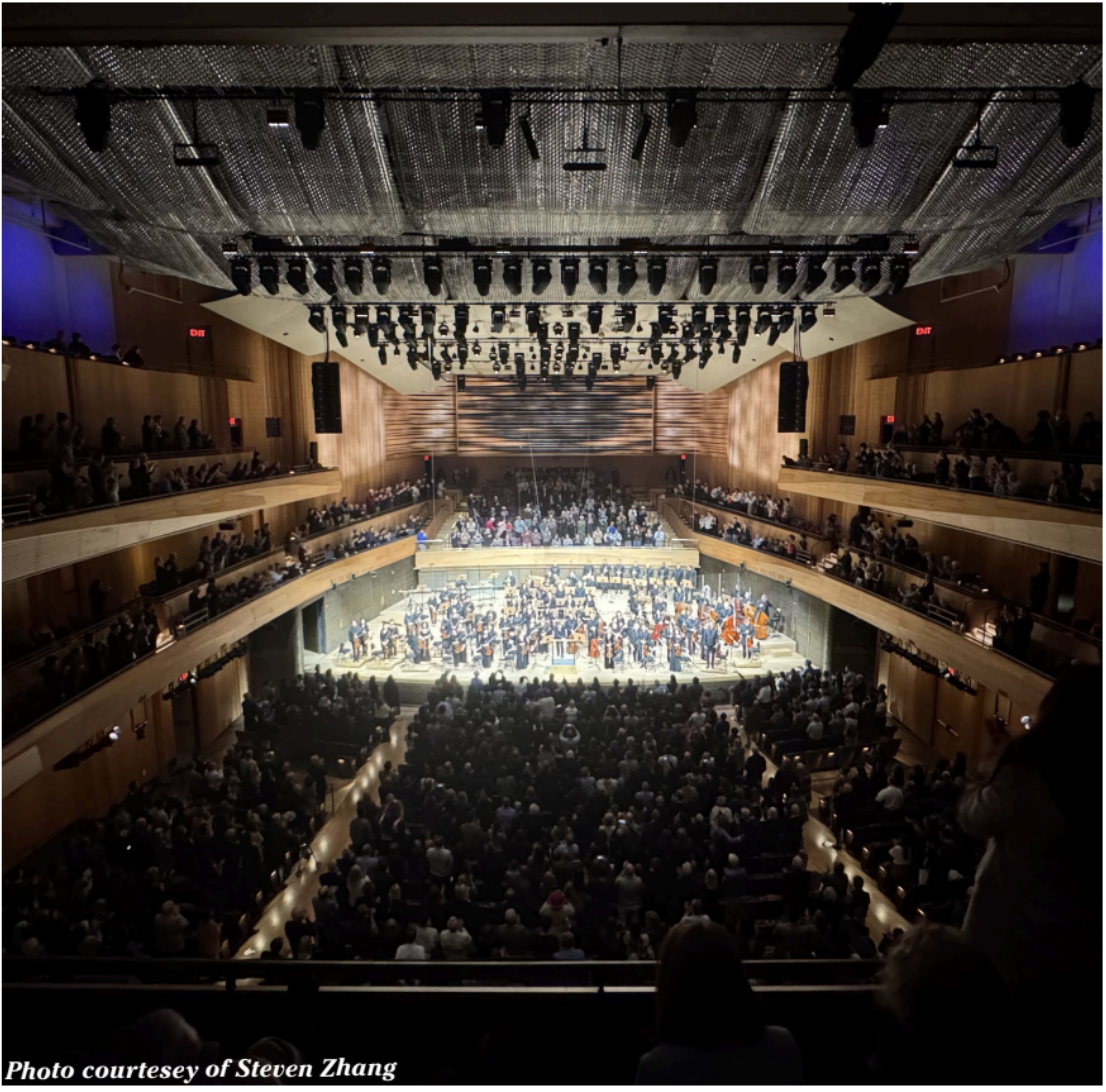
As snowfall descends onto the cloisters of red-bricked buildings and stained-glass windows on our campus, I couldn’t help but marvel at the changing of the seasons. The month of December at Taft is a period of unique contrast: the growing chill that breezes past Wu train, coupled with the warmth of Main Hall; the slow, wintery mornings as the sun rises lazily before the chaotic school days and the impending doom of exams and college decisions.
However, it is in the midst of this contradiction that I find a soothing calm in a few seemingly mundane moments: the sound of a pianist practicing in Potter’s Gallery, or the echoes of Collegium’s rehearsals down Lincoln Lobby. There’s a common thread: the enduring presence of classical music. So as the year wraps itself in twinkling lights and familiar melodies, there’s no better chance to slow down, press play, and let classical music remind us what it means to feel deeply.
This December is the perfect month to add something new to your musical rotation; wintertime is an opportunity to slow down and reflect. Thus, classical music, with its deep history and its emotional warmth, is a fitting soundtrack. Now, if you’re not someone who’s already a musician or established fan, the genre can appear to be stuffy and hard to approach. While it may seem cold and icy on the surface, a quick dip below the surface reveals that classical music is as diverse and personal as one can imagine.
If you think classical music is all hushed halls and polite applause, Tchaikovsky’s 1812 Overture proves otherwise. It’s loud, brassy, and unapologetically over-the-top. Tchaikovsky wrote the Overture in 1880, after being commissioned to celebrate the consecration of the new Cathedral of Christ the Saviour in Moscow, along with Russia’s historic victory over Napoleon’s 1812 invasion.
To me, the backstory reads almost like a film script. Russia, 1812: a desperate defense against invasion; a winter hardened by struggle. Tchaikovsky captures all of it: the quiet opening is akin to a prayer murmured in a dimly lit chapel; soon, the battle arrives in the thundering timpani and clashing motifs; and by the end, the music erupts into a radiant celebration, church bells pealing in fantastical triumph.
The Overture is a brilliant example of how palpable emotions can be through thoughtful orchestration and composition. The low strings convey uncertainty, the tension before conflict. Sudden brass fanfares are like armies charging forward, snare drum rattles are marching feet in snow. Though Tchaikovsky never intended it as holiday music, the 1812 Overture has found a permanent home in winter celebrations. It’s one of my favorite examples that classical music isn’t always polite or distant. Sometimes, it goes big. Sometimes, it shoots cannons. A 2007 recording of the piece by the Royal Philharmonic Orchestra can be found below.
To me, another quintessential piece of this season is Antonín Dvorák’s New World Symphony. It is cemented in the classical canon as a work of extraordinary emotional depth, with its bracing melodies and the instantly recognizable opening theme in the fourth movement. However, what moves me the most about this piece is its backstory.
It is the year 1893. Dvorák, born in the Austrian Empire to an innkeeper father, was fifty-two and riding the wave of success he had received in cities like London and Prague. That winter, far from his Bohemian homeland, Dvorák found himself in snow-covered New York City. He was appointed director of the National Conservatory of Music, and was handsomely paid for it too. Nonetheless, he was now a newcomer—immersed in unfamiliar streets, distant languages, and an aching homesickness. In December 1892, as the wind howled outside his apartment near the Conservatory, he began sketching what would become his New World Symphony.
Dvorák was looking for a uniquely American musical idiom, and thus found inspiration in African American spirituals. He first listened to them in arrangements by conservatory student and composer Harry Thacker Burleigh, who would sing songs from his grandfather. While there were no actual quotations in the piece, the melody of “Swing Low, Sweet Chariot” can undeniably be heard in the first movement.
On December 16, 1893, the symphony premiered as a full-capacity audience waited at the doors of Carnegie Hall, waiting in the pouring rain to get a first listen. Dvorák himself sat in Box 10 on the second tier, listening to his creation be sent off to the world. It was received as a triumph—a work that felt at once universal and deeply personal. The New York Evening Post wrote “Anyone who heard it cannot deny that this is the greatest symphonic work ever composed in this country.”
My personal favorite is the second movement: listening to the homesick melody of the English horn rise is one of my favorite moments in all of classical music. It evokes a feeling so universal to the human experience, and to our experience at Taft’s community as well. Then in the finale, as the music lifts, you get a sense of new horizons, of discovery and possibility. I interpret it as recognizing that longing can truly birth beauty. A 2022 recording by the Los Angeles Philharmonic conducted by Gustavo Dudamel can be found below.
So as December wraps the world in quiet snowfall, we finally have a moment to pause. This season, give yourself the gift of listening. Put on a piece you’ve never heard before! Let the final chord linger in the air a little longer. And when snow falls or the year’s first midnight arrives, I hope you might find that the music turns ordinary moments into something warm, alive, and unforgettable, as it has done for me.