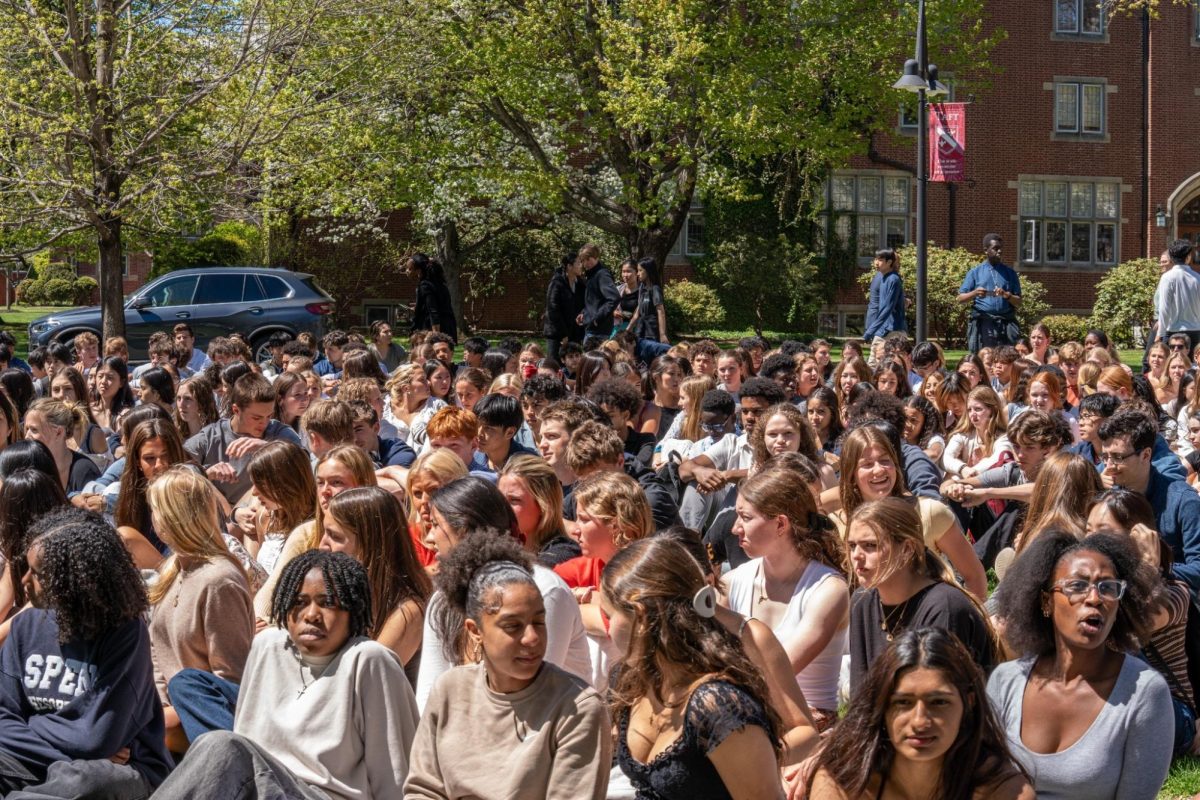











From Instagram posts to TikTok trends, social media has eased its way into our daily lives and influenced how we view ourselves and others. Living in an era where information overflows our phones, it is not uncommon to get lost in pools of algorithms or be disturbed by stimulating data. When speaker Max Stossel visited our school, however, he made the Taft community stop and think about whether we controlled our apps or if they controlled us.
Many students found his speech interesting. Stossel’s presentation was insightful and entertaining. Unlike most talks about social media, which only focus on its dangers, Stossel emphasized that he is not persuading students to delete all forms of social media, but to reflect upon the real happiness it has brought us. Throughout his speech, he interacted with the audience and showed many relatable personal stories, which encouraged us to reflect upon our use of social media.
Stossel described how social media platforms are intentionally designed to capture attention and keep users scrolling. Many students can undoubtedly relate to the experience of picking up their phones for “just a minute” and suddenly realizing that an hour has passed. Stossel explained how algorithms learn our habits and emotions, and how this constant stimulation can make it difficult to focus on schoolwork, sleep, or even face-to-face relationships. Furthermore, social media can directly affect our relationships with others and our own mental health. While platforms like Instagram, Snapchat, and TikTok allow us to stay in touch with friends and build community, they can also blur the line between genuine relationships and online validation. Students could often become troubled with anxiety or depression when likes and followers become the only source of determination for self-worth. For this reason, we should pay extra attention to how we develop our relationships with social media.
At the same time, when used mindfully, social media can also be a space for support and friendship. In his speech, Stossel provided helpful advice on how to resist the temptations of social media to not procrastinate, and actually get work done. Some of them include:
- Turning off non-essential notifications to avoid distractions
- Setting your phone to black and white mode
- Setting time limits
- Downloading apps that will help you be on task
At Taft, social media plays such a large role in student life, from sharing sports highlights to staying connected with friends. Therefore, it is important for us to make conscious choices that will protect our well-being. As a community, we should be mindful of how we treat others online, as well as look out for friends who are influenced negatively by social media. On a personal level, everyone can start implementing Stossel’s ideas by finding alternatives to social media, like taking a walk, writing, or simply spending time with friends rather than scrolling. Sometimes, a simple reflection can make us pause and think: Did the time spent scrolling through posts and TikToks truly bring me happiness, or did I waste a large chunk of time on things that are irrelevant to my own life?